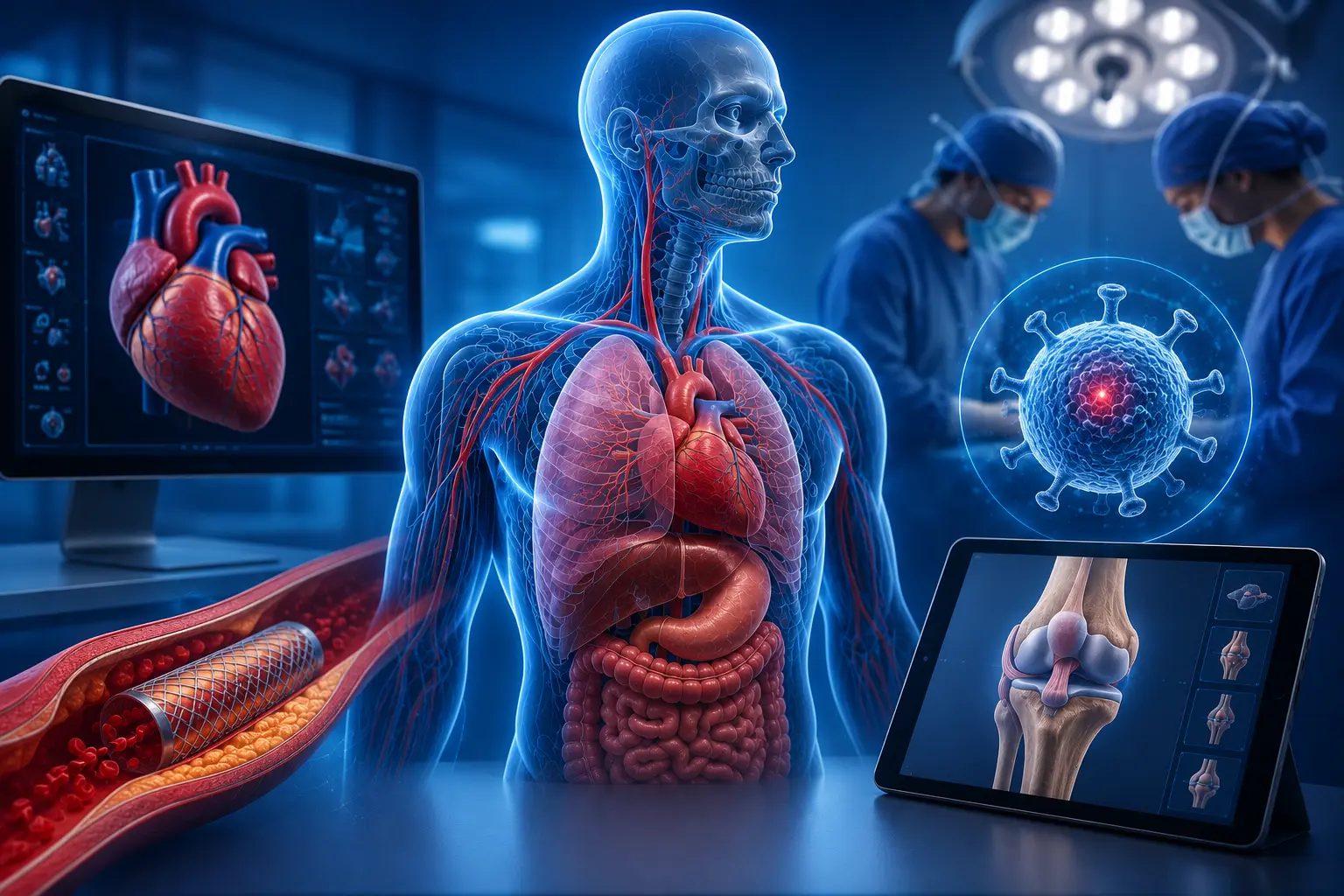
Medical animation in 3D has revolutionized the healthcare industry by providing a powerful way to visualize complex biological processes, medical devices, and treatment procedures. It bridges communication gaps, improves patient understanding, and enables healthcare professionals to explain medical concepts with greater accuracy and clarity.
Through advanced medical animation, organizations in the healthcare industry can address challenges such as miscommunication, poor patient adherence, and limited understanding of complex therapies. These visual tools make healthcare information more engaging and easier to comprehend for both patients and professionals.
Additionally, 3D medical animation enhances healthcare education worldwide by providing students, clinicians, and researchers with clear, consistent, and reproducible visual learning resources. This technology supports better clinical training, knowledge retention, and improved patient care across the global healthcare industry.
1. Enhancing Patient Education in the Healthcare Industry
Education of a patient is one of the pillars of the healthcare sector, and 3D medical animation helps to explain the terms where a straightforward explanation fails. As an example, cardiac stent placement or the mechanism of chemotherapy animations assist the patients in learning about medical treatment. NxtGen facilitates medical communications by optimizing animations into the organized outputs which conform to healthcare IT services. This will decrease anxiety, increase adherence and enable patients to make educated choices. The use of animation in the context of medical healthcare allows all institutions to deal with healthcare challenges that are associated with misinterpretation and provide patients with the necessary information that is appropriate and accessible.
2. Supporting Healthcare Professionals with Visual Tools
Clinicians in the healthcare sector are usually challenged with explaining complex procedures over time, 3D medical animation eases the process and allows health experts to show surgical procedures, drug mechanisms, or the results of a diagnostic imaging. By way of illustration, laparoscopic surgery simulation leads to better training and patient consent deliberation through animations. NxtGen polishes such outputs such that they comply with medical communications standards to be clear and reproducible. Through the adoption of animation in healthcare IT service, we will assist clinicians to eliminate healthcare problems with miscommunication. This builds trust and better patient outcomes as well as increasing the credibility of medical healthcare institutions.
3. Addressing Healthcare Issues Through Animation
The health sector has been experiencing a number of healthcare problems such as patient non-compliance and misunderstanding of medical practices and a lack of knowledge on complicated therapies, among others. 3D medical animation has helped solve these problems because it gives information in a visual form. Insulin titration schedules can be given as an example of adherence-enhancing animations. NxtGen makes sure that these outputs are compliant with medical communications standards and optimizes them to become clear and reproducible. The incorporation of medical healthcare through animation improves patient education and minimizes errors in medical institutions. This systematic method empowers healthcare providers to provide safe, evidence-based care and advances the outcomes in the entire medical community of the world.
4.Role of Healthcare IT Services in Animation Integration
The practices that are used in modern healthcare industry are based on the use of healthcare IT services to provide animations safely and effectively. Telemedicine platforms, electronic health records and patient portals incorporate 3D medical animation as a means of improving communication. Indicatively, oncology patients are provided with the ability to access animations on the process of chemotherapy via digital platforms. NxtGen assists scholars to produce manuscripts that bring out IT integration with primary focus on clinical efficiency. By complying with the standards of medical communications we make sure that the outputs are accurate, repeatable and clinical relevant. This intensifies the cooperation between healthcare specialists and patient safety in the medical healthcare systems.
5. Global Medical Education and 3D Animation
3D medical animation is an essential part of medical education all over the world. It enables students to visualize anatomy, physiology and pathology in a manner where textbooks cannot. As an illustration, cardiac electrophysiology animations improve the knowledge of arrhythmias. NxtGen enriches such outputs to the medical standards of communications to make them clear to various populations. With the application of animation in medical healthcare curricular issues in medical institutions, the problems associated with healthcare due to insufficient understanding are conquered. This is a systematic practice that reinforces biomedical education that would equip future medical practitioners to provide evidence-based care. Global and reproducible educational tools are advantageous to the healthcare industry.
6. Medical Treatment Visualization in the Healthcare Industry
In the medical field, it is essential to have well-defined illustrations of medical treatment procedures. 3D medical animation is used to illustrate drug action, surgical and rehabilitation processes. As an example, immunotherapy pathways and animation can be used to inform patients about the available treatment of cancer. NxtGen ascertains the presentation of manuscripts with verified endpoints with the standards of medical communications. By applying outputs to reproducible refinements we assist scholars and clinicians to present findings that reinforce patient education. This organizational practice enables medical practitioners to provide safe, evidence-based services and resolves healthcare problems concerning misinterpretation in medical healthcare systems.
7. Interpretation Services and Multilingual Communication
In a healthcare industry, effective communication can be applied even to the multilingual sphere. 3D medical animation balanced with interpretation can allow reaching all languages and cultures. As an illustration, cardiovascular process animations in different languages enhance patient education throughout the world. NxtGen aids in the dissemination of medical messages in multiple languages, which guarantee the accessibility of the message to a variety of populations. Through multilingual publication of manuscripts, we assist the scholars in terms of widening scope and influence. The precise translation enhances the medical results within the world and promotes fair access to evidence-based medical care. This organized method enables medical workers across the globe to provide quality and reproducible care.
8. Medical Communications and Research Publication
In the healthcare industry, effective research publication requires strong medical communication to enhance the readability and reproducibility of the manuscripts as well as clinical relevance through the use of 3D medical animation. Indicatively, drug-mechanism animations supplement the submission to scientific journals. NxtGen edits manuscripts to highlight transparency, which is in line with the standards of healthcare IT services. When we incorporate animation into the medical healthcare products, we assist scholars to have findings that are not subject to editorial reviews. This highly organized style enhances credibility, improves the level of acceptance and makes sure that the manuscript play a significant role in the publication of medicine in the world.
9. Future of 3D Medical Animation in the Healthcare Industry
The future of the healthcare sector is the 3D medical animation with AI and real-time trial reporting, as well as digital platforms. These inventions enhance medical communications and enhance reproducibility. Indicatively, AI-enhanced animation can hasten the spread of trial outcomes oncology. NxtGen makes manuscripts clinically accurate, reproducible and available world over. In optimizing the outputs to be published in research, we aid scholars and clinicians to be at the top of medical healthcare. Patient-focused communication will enable people to learn complicated therapies, enhance adherence and solve the healthcare problems across the globe.
Conclusion
The medical animation in 3D cannot be ignored in the healthcare sector. It guarantees proper spread of trial data, facilitates medical care, enhances medical care and empowers medical workers. NxtGen assists scholars and clinicians to create meaningful manuscripts that can enhance medical communications and provide medical outcomes globally with interpretation services and advanced healthcare IT services. With proper refinement of submissions to be published in a research, we can be sure that medical animation will play a significant role in evidence-based medicine and reinforce healthcare systems across the globe.
FAQs
1.What is the impact of 3D medical animation in the healthcare industry ?
Medical animation in 3D changes the face of healthcare industry making medical care, patient education and effectiveness of medical communications more effective.
2.Why 3D medical animation is important in healthcare communication ?
It improves medical communication, and empowers health professionals and solves medical cases, by making difficult explanations on medical treatments easier.
3.How 3D medical animation improves doctor-patient communication ?
Animation will enable healthcare practitioners to articulate therapies and enhance trust and misinterpretation within the healthcare sector.
4.Why patients understand treatment better with 3D medical animation ?
The patients will visualize the medical treatment processes enhancing adherence, comprehension, and also reduce medical problems in the healthcare sector.
5.Do healthcare organizations need professional 3D medical animation services ?
Yes, professional services guarantee the accuracy, reproducibility and adherence to the healthcare IT services standards in the healthcare industry.
6.Where to get 3D medical animation services for healthcare industry ?
The companies are available to provide specialized medical communications providers with custom-built 3D animation solutions to the healthcare sector all over the world.