
1.The Role of Peer Review in Research Paper Publication
The publication of research papers must include pre-publication peer review so that the publication of the research in the journal papers meets the requirements on methodology and ethics of the research. Reviewers assess study design, statistical rigor and clarity of writing of scientific reports. NxtGen assists scholars in polishing articles by enhancing the writing of scientific papers and the organization of literature review in research work to make them resistant to editing. This will enhance credibility and guarantee that manuscripts add value to evidence-based medicine.
2. Pros of Pre‑Publication Peer Review
The pre-publication peer review makes sure that outputs of the research papers publication are checked on accuracy, reproducibility and novelty. As an example, endpoints that are validated in oncology trials must include progression-free survival and adverse event grading. The methodological weakness is pointed out by the reviewers, which does not allow the publication of research papers with unreliable data. In research, NxtGen polishes manuscripts to be in line with the requirements of journal publication, and literature review and data analysis are incorporated. Such a systematic method enhances credibility and heightened acceptance levels in competitive peer-reviewed journals.
3. Cons of Pre‑Publication Peer Review
In spite of these advantages, pre-publication peer-reviewing of research papers can slow down the publication. Papers can be revised several times, which delays the publication of emergency discoveries. As an illustration, there might be a need to communicate fast during the outbreak of infectious diseases. NxtGen aids scholars in overcoming these hurdles and enhancing the presentation of scientific reports to make them easier to understand and reproduce. Through incorporation of science communication techniques, we make sure that manuscripts are effective and at the same time comply with the standards of journal papers publication. This is a systematic method that is timely and credible in peer reviewed journals.
4.Pros of Post‑Publication Peer Review
Peer review after publication permits wider criticism of published research papers. As soon as a manuscript is provided, the scientific community has an opportunity to judge the findings, reproduce results, and detect mistakes. This improves transparency and empowers the science communication. As an example, a review of cardiovascular trials conducted after that of the original study can point out subgroup differences that were not discovered during the original review. NxtGen assists scholars through editing scientific writing products so that manuscripts survive the continuous review. It is a methodical method that enhances the trustworthiness of research paper publication and promotes evidence-based medicine.
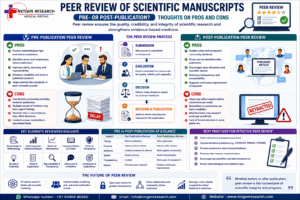
5. Cons of Post‑Publication Peer Review
The peer review done post-publication of research papers may help to come out with weaknesses after the publication of the research papers and as such, it might negate the credibility of the journal publication. As an illustration, pure oncology manuscripts containing statistical mistakes can be retracted and self-incriminating. NxtGen assists scholars in reducing these risks by editing the outputs of the scientific reports before they are submitted. Through the incorporation of literature review in research and systematic scientific writing, we can be sure that the standards of our manuscripts are at their best. This is a proactive measure that makes peer reviewed journals more credible and the possibility of post-publication corrections less.
6. Literature Review in Research and Peer Review
Peer review is aided by a robust literature review in research as it provides contextualization of research results, remains gap free, and points out novelty. As an example, the research on diabetes should incorporate the previous findings regarding the importance of HbA1c reduction and adherence on the side of the patient. NxtGen makes certain that manuscripts are prepared in the organized literature review practices, which is in accordance with the research paper publication guidelines. We refine the scientific writing products so that the scholars can provide results that can withstand the editorial review. Such systematic process enhances the credibility of peer reviewed journals and makes sure that manuscripts have a positive impact on evidence-based medicine.
7. Scientific Reports and Journal Paper Publication
Scientific reports submitted to be published in a journal paper are verified by peer review to ensure that they are accurately determined. Reviewers evaluate the level of clarity and reproducibility and methodological rigor. As an illustration, endpoints to be reported in cardiovascular trials should be validated, including mortality reduction and hospital readmission. NxtGen polishes papers to highlight transparency, which is in accordance with the requirements of research papers publications. Through the combination of the scientific writing and literature review, we assist academicians to provide findings that cannot be challenged by the editor. This organized methodology gives more credence to peer reviewed journals as well as higher acceptance.
8.Science Communication and Peer Review Transparency
Powerful science communication is a critical element in transparency of peer review. The reviews of the pre- and post-publication should focus on clarity, reproducibility and accessibility. As an example, manuscripts in oncology should include hazard ratios, confidence intervals, and subgroup analysis in clear manner. NxtGen polishes manuscripts to the standards of the publication of research papers to ensure that the journal publication standards are met. Through scientific writing and literature review in research, we assist scholars to come up with findings that are more credible in peer reviewed journals. Such an organized step will increase the presence and influence of medical publishing across the world.
9. Future of Peer Review in Research Paper Publication
Hybrid peer review models with a combination of pre-publication review and post-publication disclosure are the future of scientific publication of research papers. Tools powered by AI can help speed up reviewing, whereas open peer review improves accountability. NxtGen helps the scholars draft manuscripts that reflect these novelties, which are in line with journal papers. With the combination of scientific writing, literature review, and science communication, we make sure that the manuscripts are at the top of the list of medical publications. This methodology enhances the credibility of peer reviewed journals and promotes evidence-based medicine.
10.Peer Review in Journal Publication and Scientific Report Writing
Peer review is a key factor in the credibility in any journal publication and scientific report. During the journal paper publication, reviewers with expertise are able to assess methodology, data integrity, statistical validity, novelty and ethical standards prior to research publication to the domain of the public. The peer review of publications before publication assists in eliminating poor procedures and unprovable assertions, thus enhancing the quality of published research articles. Nevertheless, it can stall spread because of many editions. On the contrary post-publication peer review increases transparency in that an additional academic examination can occur after publication. Both models require systematic evaluation, constructive critique, and editorial control to ensure the reliability of research and international academic quality of research.
Conclusion
Publication of research papers cannot be done without peer review, be it pre- or post-publication. It guarantees the accuracy, reproducibility and credibility of the published research papers. NxtGen has scientific writing, literature review in research, and science communication skills that ensure that manuscripts are published at the highest possible standards of the journal publication. Through the process of revising submissions to be published in peer reviewed journals, we assist scholars to promote evidence based medicine and support the health care results around the world.
FAQs
1.What is pre-publication peer review in scientific publishing ?
Pre-publication peer review is a review of the manuscripts prior to the publication of the research paper whereby methodology rigor and credibility are assured in journal publication.
2.What is post-publication peer review (PPPR) in research journals ?
The peer review of post-publication research articles enhanced transparency, accountability, and continued integrity in the publication of journal papers.
3.What is the difference between pre-publication and post-publication peer review ?
Pre-publication guarantees high quality in the publication of research papers and post-publication in the evaluation of the accuracy of scientific reports in the publication of journal papers.
4.Why peer review is important in scientific manuscript publication ?
Literature review is validated by peer review during research process, it enhances maintaining of science communication and credibility during processes of publication of research papers.
5.How peer review ensures the integrity of scientific research ?
Peer review identifies mistakes, verifies discoveries of scientific reports, and preserves reproducibility in the publication of research papers among peer reviewed journals.
6.What is the difference between pre-publication and post-publication peer review ?
Pre-publication preserves the quality of publication of research papers before publication whereas post-publication increases transparency of published research papers in journal publication.